How do I take a photo that measures consistently?
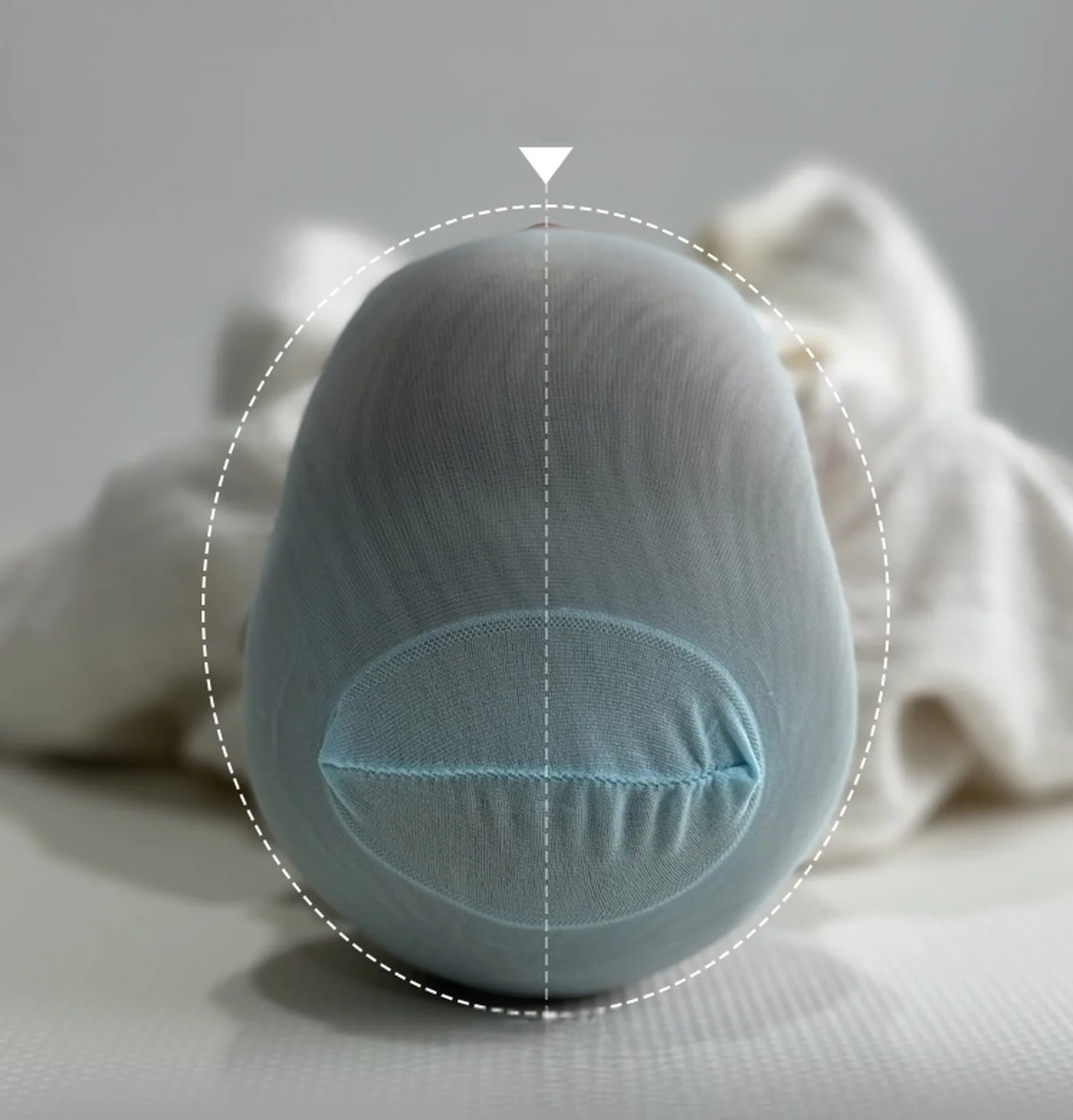
Shoot straight down from directly above, with the top of the head pointing to the top of the frame. Fit the whole head into the frame with a little margin around it, use even, diffuse light, and take off any hat, headband, or hair tie first. Those five things are what make one photo comparable to the next — get them right and the score reflects the head; get any of them wrong and part of what moves is the photo, not the head.
What angle should I shoot from?
Straight down, from directly above the head — not from the side, and not at a tilt. Hold the camera flat and parallel to the surface your baby is lying on, centred over the middle of the head.
Which way should the head point in the frame?
Top of the head toward the top of the frame, chin toward the bottom. This isn't a style choice: the measurement uses the image's own vertical edge as its reference line, so the orientation you shoot in becomes part of the measurement itself. See the full explanation for why the reference line is built this way.
How much of the head should be in frame?
The whole head, with a little margin around it — close enough that the head fills most of the frame, far enough back that no part of it is cropped off at the edges.
What about lighting?
Even, diffuse light works best — daylight from a window without direct sun is a reliable choice. Strong side lighting or a single hard light source can throw shadows across the head that make the outline harder to trace cleanly.
Should I remove hats, headbands, or hair ties first?
Yes. Anything that changes the outline of the head — a hat, a headband, a hair clip, a bow, a hair tie sticking up — should come off before the photo. Hair itself is fine; it's anything added on top of it that can throw the outline off.
What if I can't get it exactly right?
There's no safety net catching mistakes here — the five things above are what keep a photo measuring consistently, so it's worth the extra few seconds to get them right rather than shooting quickly. An automatic check does compare the traced outline against a fitted ellipse and flags anything that doesn't look like a clean head outline, but that check's verdict is only recorded, not used to hold back or re-request a result — so a photo that missed the mark can still produce a reading. See known limitations for how often that happens. Once you have a routine that works, the biggest thing to protect isn't any single perfect photo — it's shooting the same way every time you scan, which is what makes scores worth comparing from one month to the next. See tracking changes over time for more on that.
Once you're happy with a photo, see what the Proportion, Symmetry and Harmony scores mean next.
For informational and entertainment purposes only. Consult a professional if you have health concerns.